Why Albums?

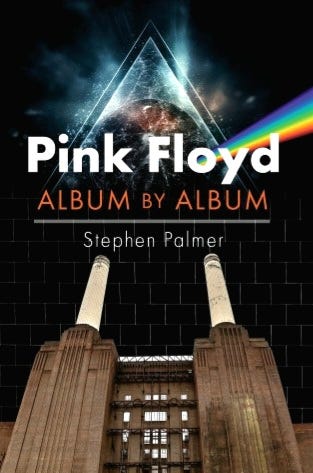
Today's Pink Floyd: Album By Album excerpt is my second book introduction. This one is quite personal.
Younger folk listening to music these days have a problem. At least, they do according to older folk.
I am one of those older people. My love of music – progressive, rock and electronic in particular – began in around 1977 when I was fifteen and at school. In those days, the preeminent musical forms were the single and the album. I liked songs released as singles, and I watched Top Of The Pops as often as my parents would allow, but the format that really spoke to me was the LP: the long-player. There was a natural beauty of form to the LP that spoke of the ideal design. It was the musical equivalent of the wheel, the book, or the teapot. Once invented, it was a fixture. Moreover, at twenty minutes per side, the LP enclosed the average human attention span to perfection. Chance brought it into being, and, once it had appeared, it began to be exploited by groups and artists with creative vision. The Beatles, of course, were the first to make a virtue of the simultaneous compactness and expansive possibilities of the LP, and not just with Sergeant Pepper’s Lonely Hearts Club Band, which is not difficult to argue as the origin point of everything that followed. Their attitude of taking time in the studio to craft music became a standard methodology.
My first musical love back in 1977 was Tangerine Dream, but I soon discovered ELP, Yes, Genesis and King Crimson. And, of course, Pink Floyd.
I am a musician, a songwriter and a producer myself. I can say now that I have had no commercial success whatsoever. This brings many important advantages, the main one being that I was, and still am, able to record and release any album I like. One of my friends, pondering why my attitude to music was different to that of her acquaintances, described me as “a music builder.” I was flattered by this, and it made me think about the stature and cultural relevance of the LP as a classic music format. All those musical works which for me have meaning and significance are albums of roughly forty minutes; not just prog or Berlin School, but punk, synth-pop and so on. The LP, crafted in recording studios, made with love and insight, with musicality and care, is endlessly fascinating to me. I never tire of discovering new ones.
All the albums of my own of which I am most happy were built. They were constructed, from musical building blocks, in my studio, often over long periods of time, with care and passion, with insight, effort and diligence. I have worked hard and thought long about the inspiration afforded by David Bowie in his maxim – and here I paraphrase – that the best place for an artist to be is just outside their comfort zone. One of the reasons that the early Tangerine Dream LPs on Virgin Records were so remarkable was that recording them was a considerable effort. Phaedra was not easy to make.
Bowie’s maxim also applies to listening. Meaningful listening takes effort. It’s not just a matter of choosing something then pasting it up all over the place like wallpaper. One of the tragedies of the internet is that, because of its vast size and its structure, it removes too much effort from personal life. It’s easy. Too easy. Living life without making an effort is by definition easy, but easy is not necessarily meaningful; in fact, it rarely is. A life of little effort strips people of one of the foundations of their existence. Effort brings personal coherence, it brings satisfaction, it brings identity and belonging. One of the most notable consequences of our modern dependence on the internet is that our lives lack coherence, are unsatisfactory, reduce our identity to matters of race, creed or religion, and take all sense of belonging away. The so-called lonely crowd has become a lonely species. To be fair, a lot of these problems devolve from our insistence on following the capitalist, technocratic mindset, but the internet has made that problem far worse. And also to be fair, not all music is intended to be listened to in a meaningful way. That’s fine.
In my view, the anonymous, antiseptic hands of the internet have touched music and spoiled it, and because of that, the way people listen to music has changed. Therefore, the significance and relevance of music to them has changed. This is a tragedy for humanity. It is a disaster. The notion of the album – curated by the artist or group, only by them, and set in stone for all time – is becoming a minority interest. My own attitude to albums appears to be dying amongst younger listeners.
The modern obsession with single tracks and playlists in a setting of nearinfinite choice has robbed listeners of a profoundly satisfying experience, that of listening to one LP as the artist or group made it. A simple, even old-fashioned pleasure perhaps, especially the time needed to reflect afterwards. Quiet time. But I believe older listeners have the advantage here. Theirs is a musical world based on composed works, not on collections of individual songs. They have access to curated works, presented as the artists or groups intended. Not all music should be listened to like this, but some music, set in that context established during the 1960s and 1970s, is best heard as a whole. For context matters. Streaming offers no context of worth. It is an alienated experience, which, as such, has become the predominant mode of listening in our alienated times.
Music consisting of multiple streamed tracks becomes stripped of context, and therefore of meaning. It becomes sonic wallpaper. It is important to stress that this happens regardless of the genre of music or the skill of the artist. Wallpaper can be absolutely beautiful, but, even so, its purpose is to cover walls. The modern mode of listening, consisting in the main of lists of individual tracks, be they favourites, classics, new or cover versions, is to consume with diminished context; lacking meaning, lacking cultural context, without curation by the artist. Curating your own list is fine. It’s the same principle as the mix tape on a cassette. But mix tapes existed for an extra purpose beyond the music. Sometimes, the music alone should take precedence. Why not listen to music as the artist intended?
Listening to the creative output of a group or an artist over forty minutes tells you something about that person or group. It is an act of connection from mind to mind. This is a valuable human experience. Of course, listeners don’t necessarily want that all the time, but at least the possibility of enlightenment via the LP is present in that format. Listening to the streamed output of innumerable artists or groups tells you nothing about human minds, except via the lowest common denominator. Streaming is an experience of homogeneity: ersatz, insignificant.
This, to me, reveals the beauty of the LP as it was in the 1960s and 1970s. The artists and groups of that era wished to create something according to their creativity and their musicality. No matter if they were humble or sincere, or on the other hand that they considered themselves to be gods or geniuses. They, the artists, were the individuals in charge of preparing their LPs. The idea was that the listener could walk beside them for about forty minutes – or wander off elsewhere, as may be. You didn’t have to buy their LP. But no listener devised their own walk, except album by album. I did not want to fragment my listening experience when I was in my teens. I wanted to discover what the artist or the group had to say to me over that forty-minute period. That mattered to me. And it still matters.
I view albums as gemstones of music. I want to experience the whole gem, as it is cut, as it is coloured, in the setting in which it is presented, as it feels to me. I don’t want a jeweller throwing a bag of paste brooches at me.